

The Koutsavitiki traditional costume


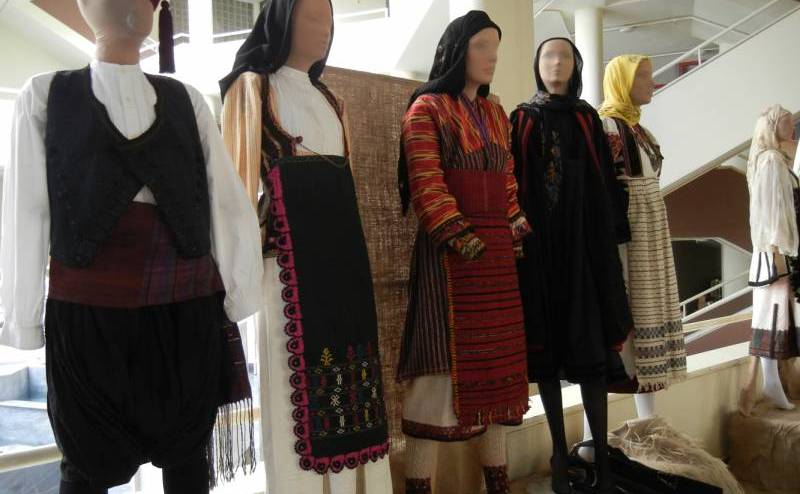
For centuries, the Koutsavitiki traditional costume (also known as Alatzas) accompanied all the significant moments in the lives of the inhabitants of the various villages of Taygetos. The traditional costume signalled the day's importance at weddings, major religious holidays, and every family event.
Simple with strict lines and without intense colours, the Koutsavitiki costume represents the hard life of the inhabitants of the Taygetos massif. There was only one costume for each occasion and not different types, as in other regions of Greece, while young and older women wore the same in the villages. The only element that changed (depending on the occasion) was the colour of the scarf, where "Yemeni" was yellow for joys, and "Barezi" was brown or black for sorrows.
Most parts of the costume were made of sheep and goat wool, which was first hand-woven by the women and then woven on the loom. A typical example is the woollen vest, "Jurdi", which is the most essential part of the Koutsavitiki costume. A unique feature of the costume is that it does not carry any jewellery or other unnecessary decoration. Hardy women did not wear the outfit to show off wealth but to set a particular tone for the occasion. In this way, they joined all the women of the village and shared their joys and sorrows.
In 2017, the "Koutsavitiki Costume Association" held for the first time an event dedicated to the Koutsavitiki traditional costume in the small church of Prophet Ilias between the villages of Ladas and Karveli, with the hope that this particular event will become an institution.