

Point 4-The Route of N. Kazantzakis and the real George Zorba in Stoupa


(Source: NARTOURA - Cultural Association for Art & Nature)
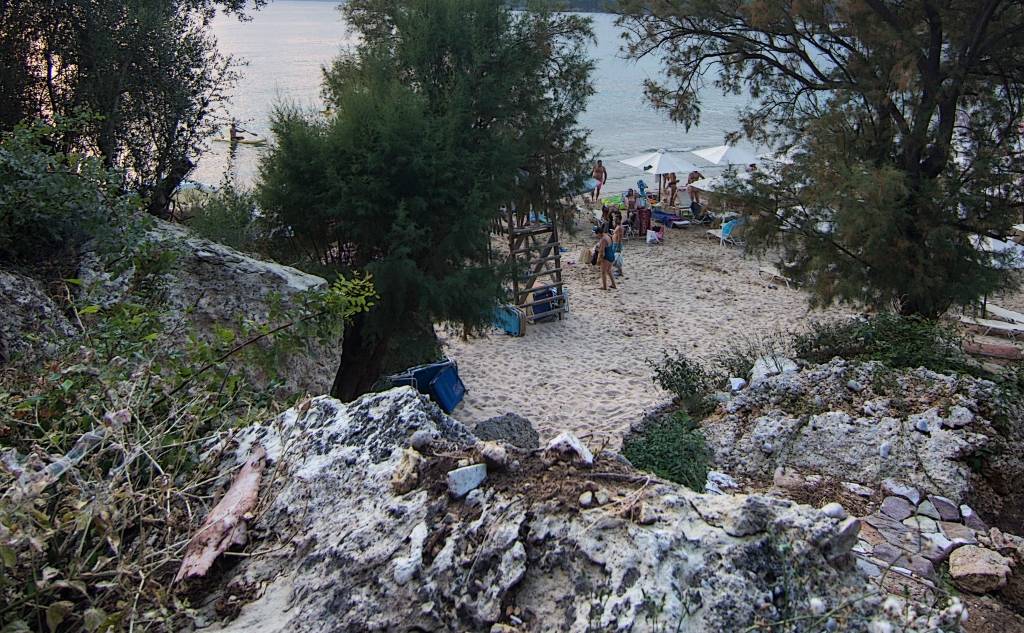
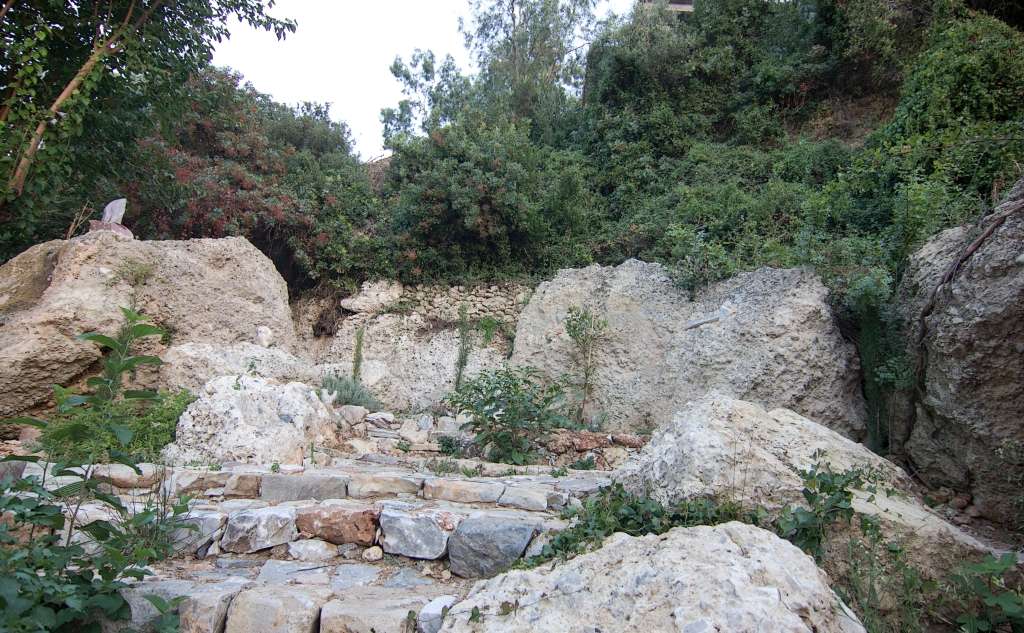
This seemingly insignificant place, a bend in the seaside path, once sheltered a hut. Not just any hut: it was the hut of Nikos Kazantzakis, the refuge of the great thinker during the years 1917–1918, when he lived in Stoupa.
It was not merely a house. It was the place, the sanctuary, where Kazantzakis wrote, reflected, prayed, laughed with Alexis Zorba, sank into introspection, and found freedom.
A Shelter Built from Simplicity
Built on Andreas Exarchouleas' (today owned by Dimitrios G. Exarchouleas) estate, the hut was a humble structure made from the simplest materials: reeds, wood, wicker branches, straw, and kerosene tins. Yet the writer asked for one distinctive detail: the door and the small window were to have pointed arches, in his beloved Gothic style, because, as he said, man has “the urge to rise upward, to behold the face of God.”
Inside, ascetic simplicity prevailed:
a wooden cot, a small desk, a worn chair, a water jug, a small burner for brewing sage tea, a brazier, a few books, and a portrait of his beloved Tolstoy. That was enough for him.
Page 70:
“We had fastened together a shack near the sea with reeds, wicker branches, and kerosene tins...”
Page 115:
“I sit inside the shack and watch the world grow dim while the sea glimmers in ash-green light...”
The World Outside: Fire, Companionship, and the Magic of Zorba
In front of the hut, in a small hollow in the earth, Zorba would often light a fire. He cooked with artistry, sometimes preparing fragrant bazina with his wooden spoon from Mount Athos, other times simple yet delicious meze dishes.
Page 91:
“He took an armful of wood, arranged it skillfully between two stones, lit a fire... and the cooking began.”
Once, they say, when Zorba kept pestering “Boss Nikos” with the question, “What should I cook?”, Kazantzakis absentmindedly replied:
“Boil stones!”
Zorba, naturally, obeyed. And when mealtime came, he called out:
“Come, boss, I made a stone soup, magnificent!”
He was more than a cook-he was a friend.
The Earthquake and the End of the Hut
In 1927, a powerful earthquake struck the region. Massive boulders crashed down from the mountain and crushed the hut. The loss was material, but the memory remained untouched. Today, the hut no longer exists. Yet its aura still lingers.
Testimonies of Living Memory
The locals still remember.
Panagiotis Exarchouleas, eight years old at the time, remembered the torn straw chair and Kazantzakis walking around in pyjamas, an astonishing sight for village children.
“We used to tease him, shouting: ‘Underpants! Underpants!’
Katerina Andrea Exarchoulea remembered a modest and humble man. She offered to sweep his room or cook him handmade striftadia pasta, and he would calmly answer:
“I still have lentils.”
When she once saw him walking in a light rain and begged him to come inside, he smiled and said:
“It doesn’t matter, Katerina. Rain is a beautiful thing.”
A Frugal Soul, Kazantzakis and His Food
Amid war and blockades, food was scarce. But Kazantzakis demanded little. Rusks with olive oil, olives, wild greens, beans, and lupins were enough for him. Only when Angelos Sikelianos arrived with his personal cook did the table fill with chickens, fish, and delicacies, luxuries for a man who could find happiness in a chestnut and a glass of wine.
Page 105:
“Happiness is a simple and frugal thing, a glass of wine, a chestnut, a humble little brazier, the murmur of the sea...”
Baptisms, Friendships, and Everyday Life
Little Giorgis A. Exarchouleas, baptised by Zorba himself, remembered the celebration after his christening. Hunger was widespread, and yet his mother cooked spinach rice, which everyone honoured, even Kazantzakis’ guests. His father would tell him:
“May you resemble your godfather, even if only in his little finger!”
Zorba’s daughter, Androniki, the “godmother” of all the village children, continued visiting Stoupa until the end of her life. She confessed that “the best years of her life were spent in Kalogria.”
From Androniki’s son-in-law, a professional photographer, came photographic evidence of the presence of Kazantzakis and Zorba in the area, though sadly, many photographs were lost over time.
This hut was never merely a dwelling. It was a symbol.
In its simplicity, it sheltered one of the most multifaceted minds of the 20th century.
In its humility, it gave birth to moments that became literature, spirit, and a voice heard around the world.
Here, in the shadow of the hut that no longer stands, the world feels somehow more real. And if one falls silent, perhaps one can still hear the crackling brazier, the footsteps of Zorba, and the voice of Kazantzakis whispering:
“Happiness is nothing more than simplicity. And truth, a little window wide enough only for the soul.”