

Point 11-The Route of N. Kazantzakis and the real George Zorba in Stoupa


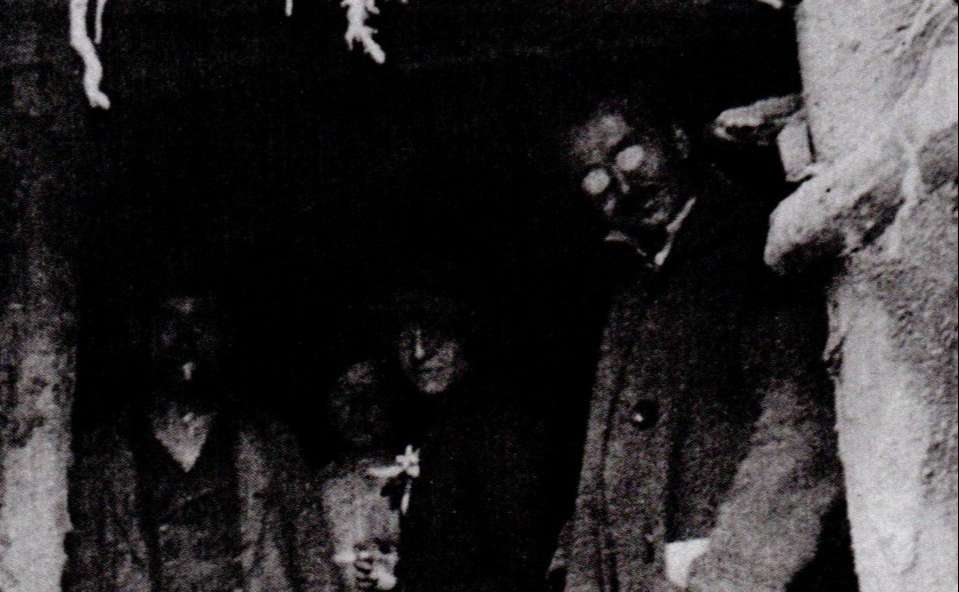
(Source: NARTURA, Cultural Association for Art & Nature)
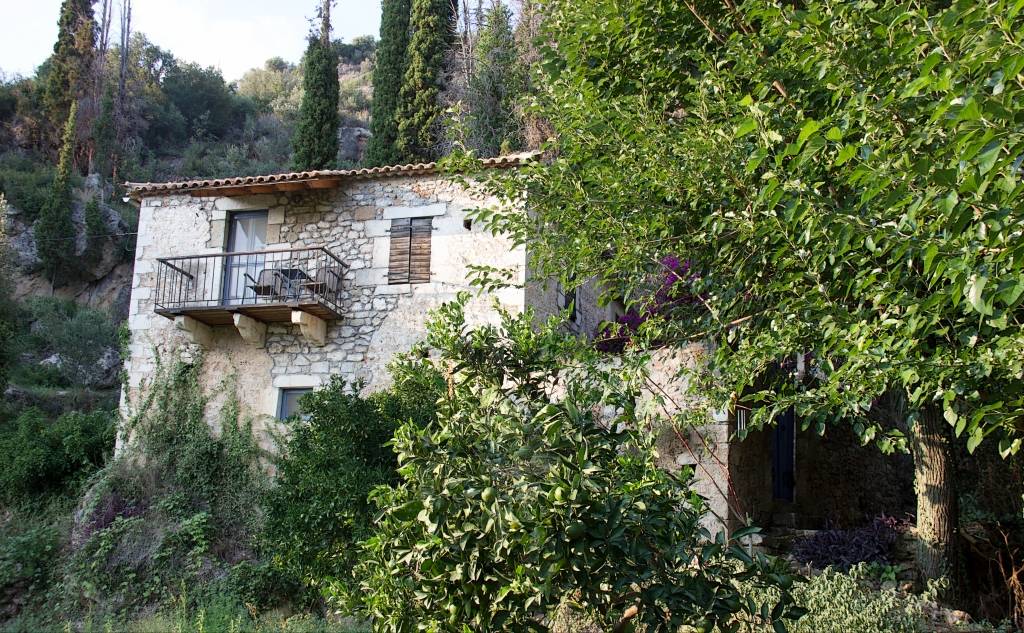
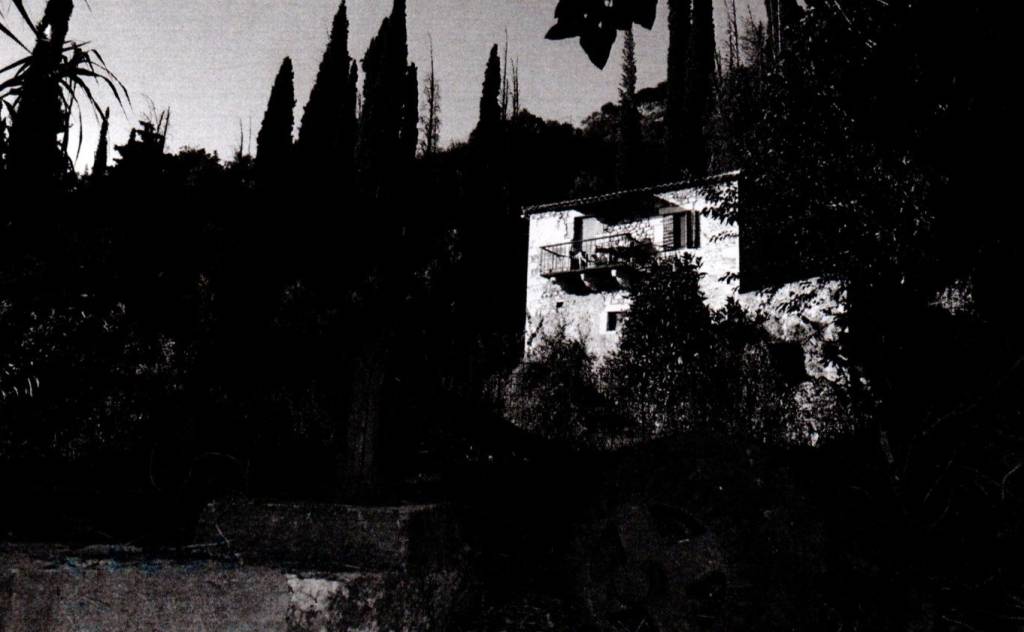
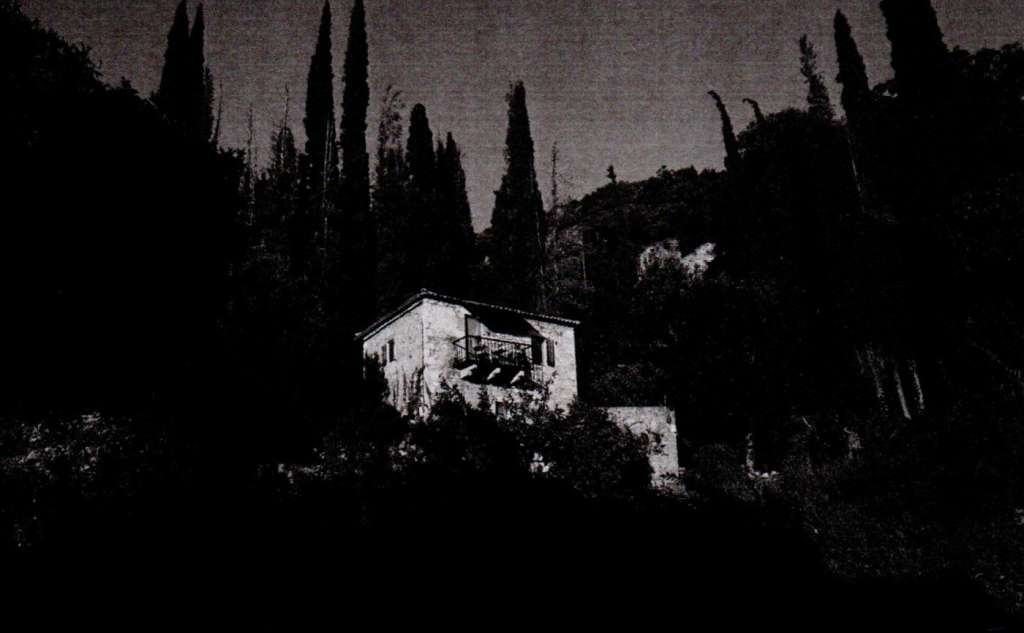
This imposing stone house, founded upon deeply rooted boulders, still stands over Prastova like a guardian of an era that has passed, yet has never been forgotten. Built in 1891, it housed, for several years, the offices of the lignite mining company, and with them the voices, papers, decisions, labour, mistakes, and dreams of that time.
Although today it functions as a private residence, nothing essential has changed. Its noble austerity remains unmistakable:
- embraced by massive cornerstones,
- framed with carved local marble,
- a heavy and solid staircase,
- and a tiled balcony overlooking the sea, a rare luxury for its era.
The ground floor, the shadows of matter
The ground floor of the building served as the company’s storage space. There they stacked:
- wires,
- pulleys,
- crowbars,
- pickaxes,
- acetylene lamps,
- and tons of timber used to reinforce the mine galleries.
Sometimes, when night fell early, or the route from the villages was delayed, workers slept in the auxiliary rooms, among the tools and the smell of labour itself.
The upper floor, where matter became language
At first, Georgis Zorbas himself lived upstairs when he first arrived in the region. Later, he moved to Kalogria, and the building became the company's administrative headquarters.
Here, quite literally, the history of the enterprise was written by people who would later gain particular significance:
- Vernikos, then an accountant, later a shipowner,
- Elpidoforos Chioureas, a local man and owner of Prastova, responsible for payroll,
- Farantatos, the legal adviser,
- and, of course, Nikos Kazantzakis, entrusted with legal matters, observer, commentator, and witness to events.
Stationery became raw material for literature.
Here, Kazantzakis was not writing only contracts, but also stories with his gaze.
The historic furniture, humble treasures
And yet, pieces of that era still survive and are displayed with reverence:
- The handmade payroll desk, with drawers functioning as safes, is preserved at Stoupa Restaurant.
- The accounting desk, austere and sturdy, is housed at Akrogiali.
They are silent witnesses, yet eloquent ones, holding within them the echo of decisions, signatures, and perhaps a few sighs.
The inscription, the wisdom of time
High upon a cornerstone on the northern side of the building survives an old inscription, common in homes before 1900, yet timeless in its wisdom:
“Today mine, tomorrow another’s, and never truly anyone’s.”
A simple reminder that nothing belongs entirely to us, neither houses, nor treasures, nor eras.
The courtyard, a living breath of memory
Around the house, the courtyard still lives. There stands the old well from which the workers once drank. Nearby are caves used as shelter-huts, still blackened by the fires lit for warmth and cooking.
A little higher up remain traces of an old apiary and the last two or three orange trees, silent memories of the vast orchard that once flourished here. Locals remember that when the lemon and orange trees blossomed, the entire area was filled with fragrance.
Excerpt from Kazantzakis
“As I approached the orchards, breaths came rushing toward me, breaths scented with lemon-orange blossoms and bay leaves.”
A building where labour became memory
The Company Offices of Prastova are a chapter in the book of life.
Here:
- Zorbas confronted the world through action,
- Kazantzakis lifted his gaze toward thought,
- time left its inscription upon the stone and its fragrance upon the air.
This building binds together the worker's sweat and the writer's inspiration. And if a visitor stands there quietly enough, perhaps they may hear the voices of that era returning:
The desk creaks. The ink flows. Zorbas strikes the hammer.
And Kazantzakis gazes toward the sea, and writes.