

Point 5-The Route of N. Kazantzakis and the real George Zorba in Stoupa


(Source: NARTOURA - Cultural Association for Art & Nature)
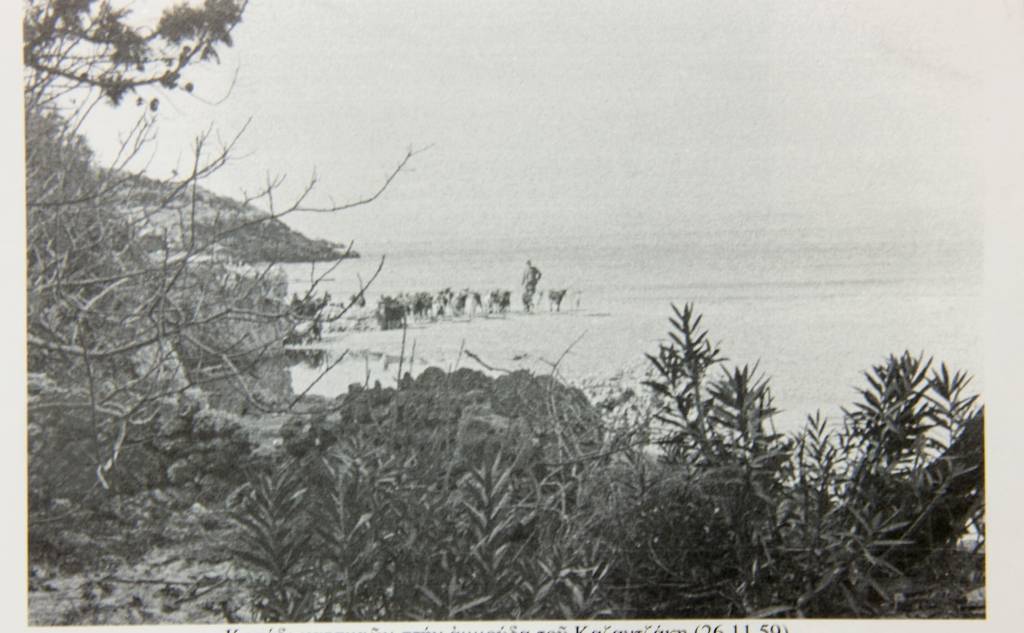
A little further inland from Kalogria Beach, where the path descends gently, and the stone walls seem to whisper old stories, a humble spring still flows. Its water once refreshed the villagers and their flocks, a place of life for the land, and a place of contemplation for Nikos Kazantzakis.
Here, every afternoon, shepherds would bring their sheep to drink. And here, Kazantzakis encountered a figure who deeply impressed him and later found his way into his literary world: old Nikolis.
Old Nikolis, The Man Who Conquered Necessity
Old Nikolis was no ordinary shepherd. He was a symbol of self-sufficiency and freedom. He lived entirely independent from the civilization of his time. Everything he wore, he had made himself:
- Tsarouchia shoes from pigskin
- Clothes from sheep’s wool
- A cloak woven from goat hair
- Buttons made from the thorns of wild pear trees
Kazantzakis observed him with admiration. This quiet, anonymous man had achieved complete self-reliance. He needed nothing produced by industry. He depended on no one.
He was the living embodiment of freedom, and for Kazantzakis, that was the highest virtue.
“Zorba was the action. The old shepherd was the self-sufficiency. And I was the anguish of trying to unite the two.”
The Fig Tree of the Noble Maiden, The Poetry of the Landscape
Above the spring still stands, now almost legendary, the giant fig tree, its trunk forked, aged, nearly human in appearance. Kazantzakis describes it in his book as “The Fig Tree of the Noble Maiden.”
“We passed by a great fig tree. Its trunk split in two, twisted together, already beginning to hollow with age.”
This fig tree is not merely a tree. It is a symbol of time, memory, and folklore. The locals used to say it was haunted. Kazantzakis gave it a name, and with that name, immortality.
The Stone Trough, Memory of Women and Mischief
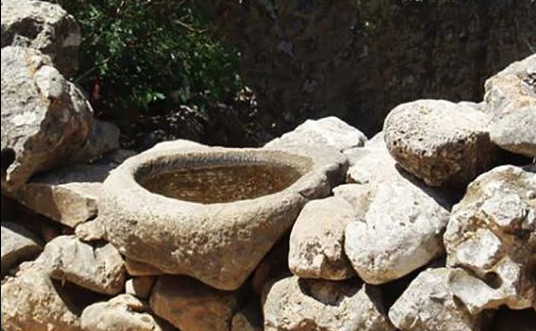
Beside the spring, the large stone trough still survives, or, as it was once called, the sgourna. There, the village women washed heavy clothes, dipping them into the spring water, scrubbing with soap and ash amid conversation, song, and the occasional sideways glance toward the wider world.
One evening, the trough became the stage for a small theatrical prank.
Alexis Zorba, in one of his playful moods, dressed himself as a ghost and hid inside the trough to frighten a local labourer known for his timid nature. When the unsuspecting man approached to fetch water, Zorba leapt out screaming. They say the poor fellow fled in terror and did not return for days.
Small stories. Comic moments. And yet these are the moments that carve themselves into the memory of a place.
The spring, the fig tree, and the stone trough form a miniature portrait of life itself.
Here, Kazantzakis witnessed the self-sufficiency of the simple man.
Here, Zorba scattered laughter.
Here, the natural landscape converses with the spirit.
And perhaps, if one stands quietly and listens to the sound of the water, one may still hear:
- The long, echoing lowing of the flocks
- The voice of Zorba mocking fear
- The pencil of Kazantzakis moving across paper
- The shadow of a noble maiden wandering among the fig leaves
This is the place where everyday life meets metaphysics, and simplicity meets timeless wisdom.